
The Big Four
Jewellers have long grouped these four stones together for their colour, their hardness and their long history in fine jewellery. In India they are known as Heera, Manik, Neelam and Panna.
Hardness is measured on the Mohs scale, from 1 to 10. It tells you how well a stone resists scratches. It is not the same as toughness, so even a hard stone can chip if it takes a sharp knock.
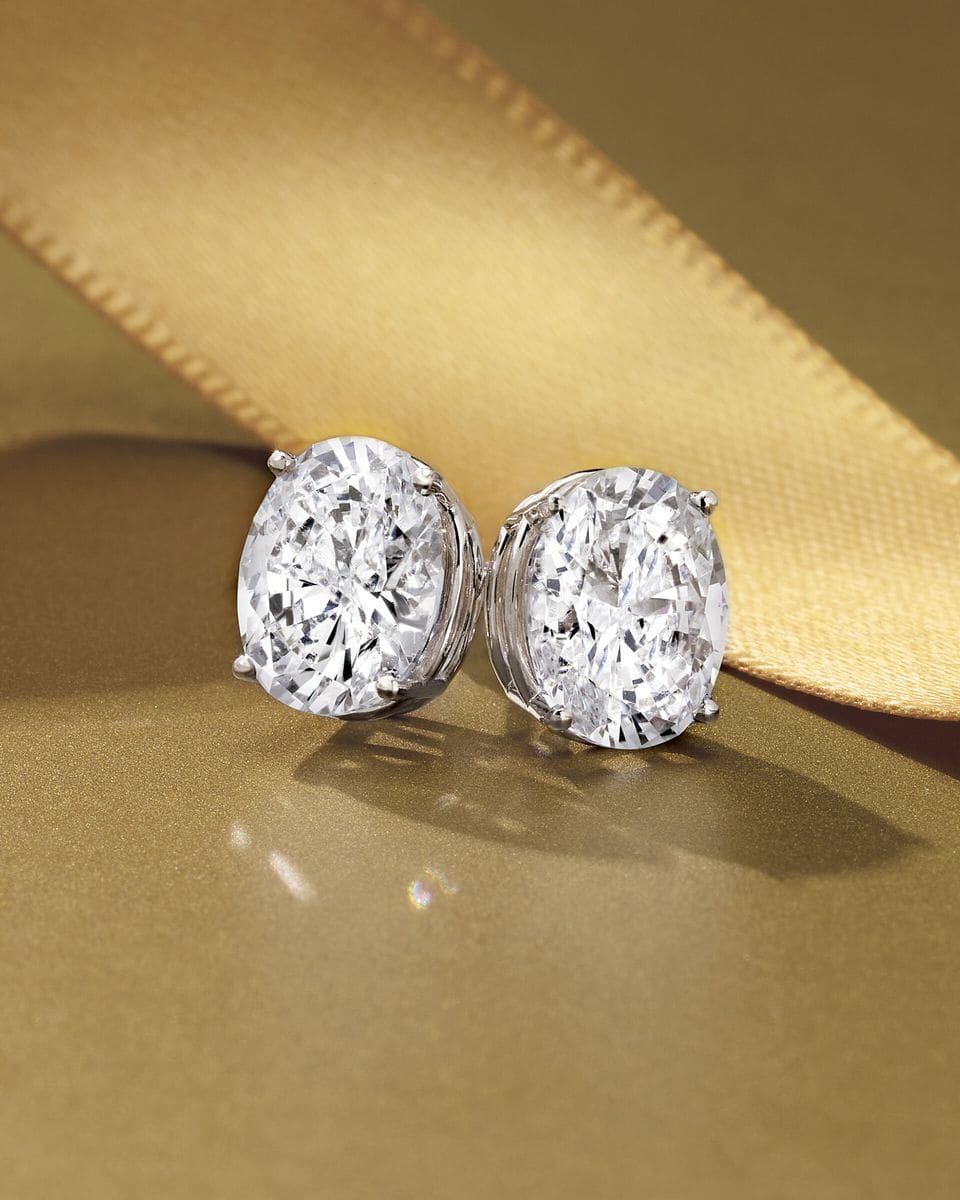
Diamond (Heera)
A diamond is pure carbon, set into a tight crystal structure deep underground. Most diamonds range from colourless to a faint yellow or brown. Rarer natural colours exist too: traces of nitrogen give yellow, and boron gives blue.
At 10 on the Mohs scale, diamond is the hardest natural material, which makes it a good choice for pieces you wear every day. A hard knock on an edge can still chip it.
- Colours to know: colourless to faint yellow, plus rare natural yellows, pinks and blues.
- Care: diamonds attract grease, so a regular wash in warm soapy water keeps them bright.
Ruby (Manik)
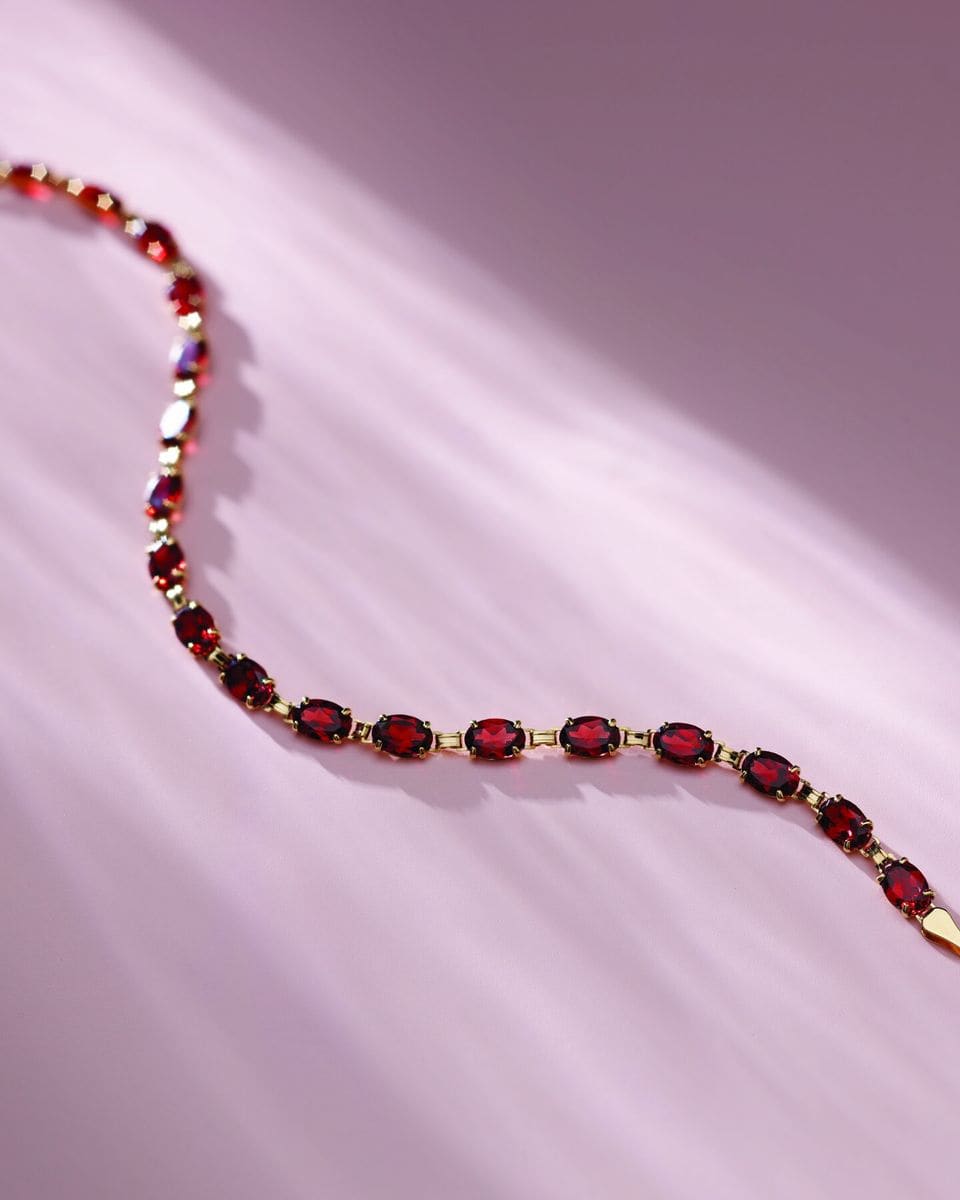
Ruby is a red variety of the mineral corundum. Its colour comes from chromium. Corundum in any other colour is called sapphire, so ruby and sapphire are close relatives.
At 9 on the Mohs scale, ruby is hard and durable, and suits rings and bracelets that see daily wear.
- Colours to know: from an orangy red through pure red to a purplish red.
- Care: warm soapy water and a soft brush. Many rubies are heated to improve their colour, which is stable. Rubies with filled fractures need gentler cleaning, so ask before using any machine cleaner.
Sapphire (Neelam)
Sapphire is corundum too, the same mineral as ruby. Blue sapphire takes its colour from traces of iron and titanium. Neelam is the Hindi name for blue sapphire.
Like ruby, sapphire sits at 9 on the Mohs scale, so it stands up well to everyday wear.
- Colours to know: blue is the classic, but sapphire also comes in pink, yellow, green, purple and orange. Yellow sapphire is known in India as Pukhraj.
- Care: warm soapy water and a soft brush. As with ruby, stones with filled fractures need gentler handling.
Emerald (Panna)
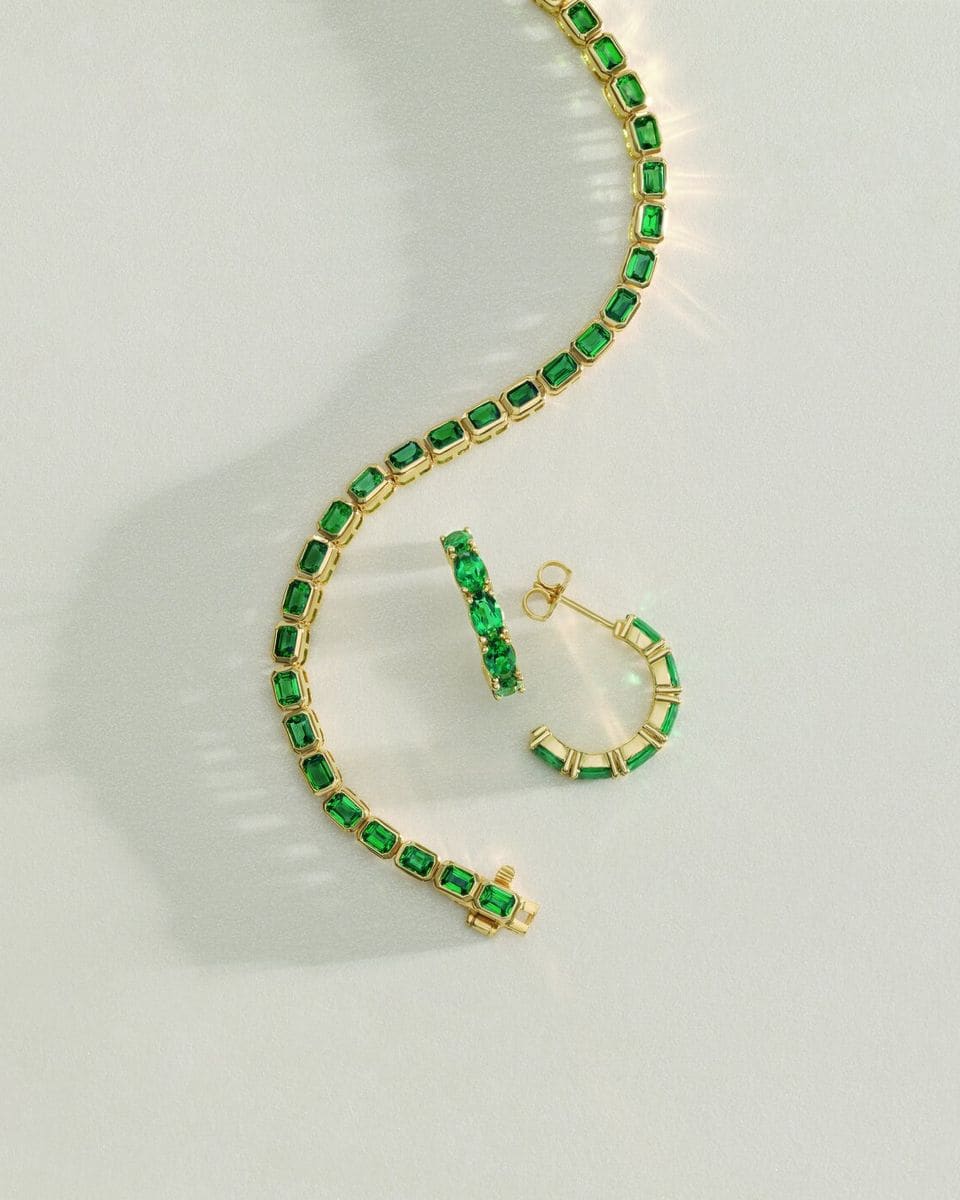
Emerald is the green variety of the mineral beryl. Its colour comes from chromium, vanadium or both. Most emeralds have natural inclusions, sometimes called the jardin, French for garden, and these are part of the stone’s character.
Emerald is 7.5 to 8 on the Mohs scale, but its inclusions make it more fragile than that number suggests. It is lovely for everyday wear in a protective setting, and best taken off for rough work.
- Colours to know: bluish green to pure green, sometimes with a slight yellow tone.
- Care: wipe with a soft cloth or wash gently in lukewarm soapy water. Never use an ultrasonic or steam cleaner. Most emeralds have their fine fractures filled with oil or resin, and heat or vibration can disturb it.
Other Gemstones We Work With
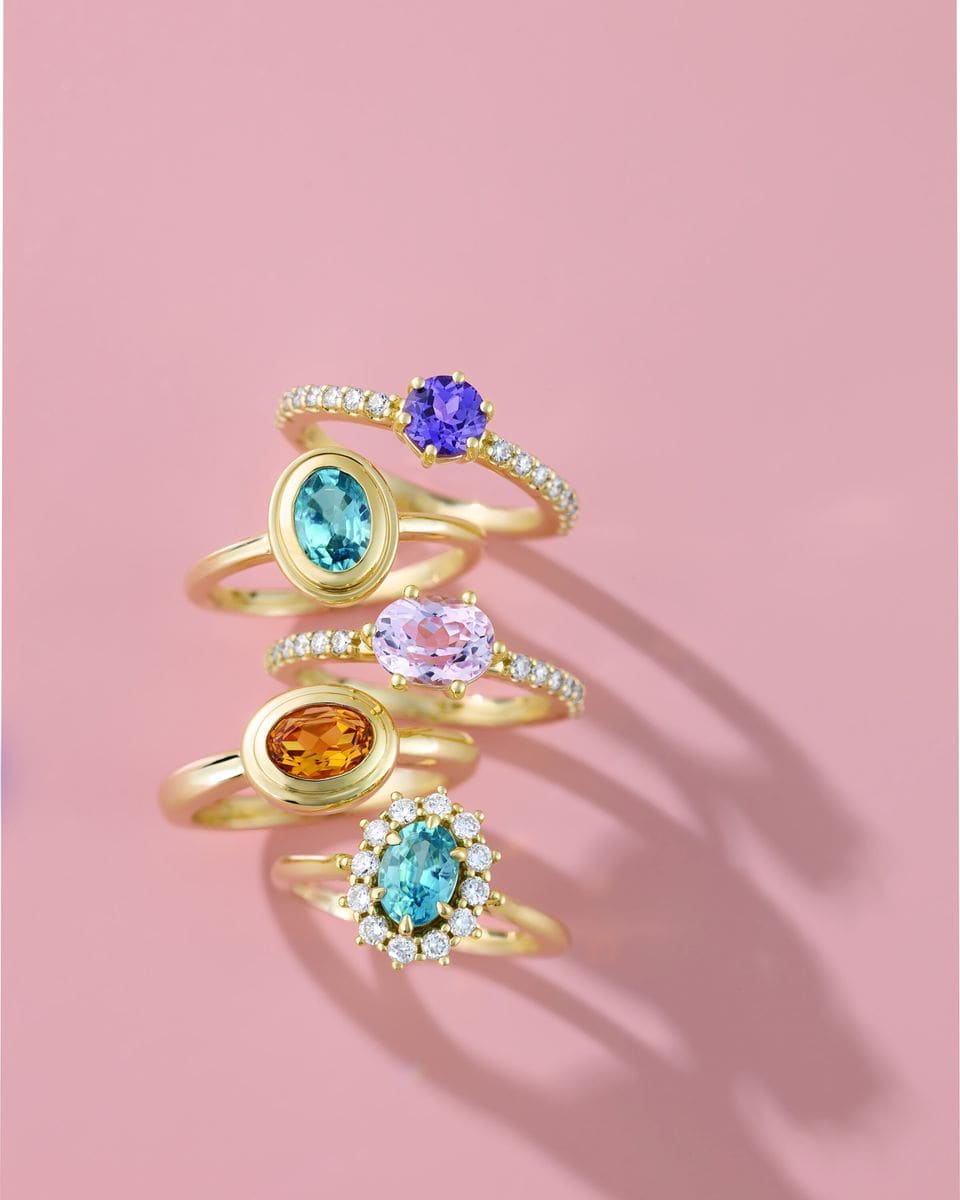
Beyond the big four, we set pearls, and stones in many colours in our gemstone rings, earrings, necklaces and bracelets. Pearls form inside oysters and mussels, not underground, and are much softer, at about 2.5 to 4.5 on the Mohs scale. Put them on after perfume and hairspray, and store them on their own.
Sources
- GIA, Ruby description
- GIA, Sapphire
- GIA, Gem Encyclopedia (emerald, ruby, sapphire)
- GIA, Spring 2020 Gems & Gemology: corundum chromophores
- GIA, The world’s fascination with fancy coloured diamonds
- GIA 4Cs blog, Gemstones category (durability and care)
- GIA 4Cs blog, More than Mohs: gem durability
- GIA, Gemstone Durability: Design to Display (PDF)